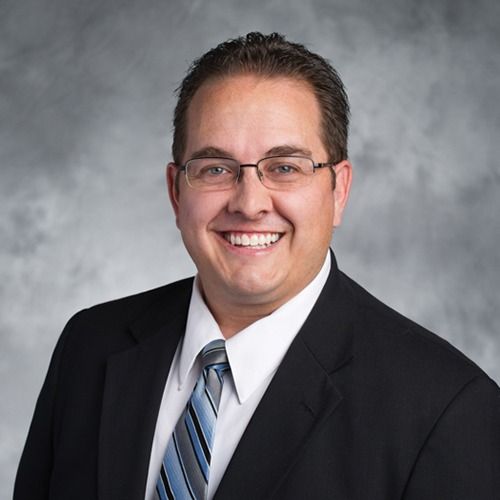
From Pediatrics to Politics: Dr. Annie Andrew's Fight for Safer Children
Dr. Annie Andrews, a dedicated pediatrician and public health advocate, joins us to address a paramount moral issue plaguing our nation: the alarming prevalence of gun violence affecting children. As she elucidates, gun violence has tragically eclipsed car accidents as the leading cause of death for minors in the United States. Through her advocacy with Future Our Vote, Dr. Andrews endeavors to intertwine scientific understanding with policy and civic engagement, striving to create safer communities for our youth. Her insights reveal not only the clinical ramifications of this crisis but also the urgent need for political action to prevent such tragedies from occurring. As we delve into her journey from practicing medicine to becoming a congressional candidate, we explore the profound connection between healthcare and the legislative measures necessary to safeguard our children’s futures.
Dr. Annie Andrews, a pediatrician and public health advocate, engages in a profound dialogue on the urgent matter of children's safety in the context of escalating gun violence in America. With gun-related incidents surging to become the leading cause of death for children, Andrews articulates a dual perspective that encompasses both clinical experiences and civic responsibility. She recounts her transition from treating victims of gun violence to becoming an activist, propelled by the harrowing encounters she faced in her practice. Through her involvement with organizations like Moms Demand Action, she underscores the critical need for actionable policies aimed at safeguarding children and preventing further tragedies. Andrews passionately advocates for common-sense gun laws, arguing that the discourse surrounding such regulations should transcend political affiliations and focus on the fundamental right of children to live free from fear. Her insights illuminate the intersection of healthcare and activism, revealing how her role as a physician uniquely positions her to contribute meaningfully to the discourse on public safety and legislative change.
Takeaways:
- Dr. Annie Andrews highlights the alarming statistic that gun violence is now the leading cause of death among children in the United States, surpassing car accidents.
- Her transition from pediatrician to political activist underscores the importance of public health advocacy in shaping policies that protect children from preventable violence.
- The podcast emphasizes that engaging in gun safety discussions should not be a political issue, but rather a collective responsibility to ensure the safety of our children.
- Andrews advocates for common-sense gun legislation, asserting that the majority of Americans agree on the necessity of background checks and secure firearm storage to prevent tragic accidents.
- The conversation reveals how grassroots movements, like Moms Demand Action, have successfully mobilized public support against the NRA's influence, showcasing the power of community activism.
- Ultimately, the episode serves as a reminder that the fight for public health and child safety is intrinsically linked to the broader struggle for democracy and social responsibility.
Links referenced in this episode:
Companies mentioned in this episode:
- Moms Demand Action
- NRA
- Everytown
Transcript
Today on Perfect Union Pending, we're joined by Dr. Annie Andrews, a pediatrician, public health advocate, and former congressional candidate who's turned her focus to one of America's most urgent moral issues, protecting children from gun violence.
Speaker A:Through her work with their Future Our Vote, Dr. Andrews has been at the forefront of connecting science, policy and civic action to make our communities safer.
Speaker A:At the time when gun violence has surpassed car crashes as the leading cause of death for children in the United States, Dr. Andrews brings both the clinical and civic perspective, not only treating the aftermath, but fighting to prevent it in the first place.
Speaker A:Dr. Andrews, welcome.
Speaker B:Thank you so much for having me.
Speaker B:I'm so happy to be here.
Speaker A:Silence is easy to edit out.
Speaker A:It's harder when you flub it.
Speaker A:After I told gotta love the.
Speaker A:It's like tech.
Speaker A:You can prepare all you want to, but tech issues always hit and you're like, serious, seriously.
Speaker A:So again, we were talking beforehand and getting to know each other a little bit better than just interviewee and interviewer.
Speaker A:And what is it like being a pediatrician?
Speaker A:So kind of, I'm an attorney and I deal with legal stuff.
Speaker A:So for me, politics kind of goes a little more hand in hand.
Speaker A:What is it like transitioning from pediatrician to civic organizer, candidate for Senate?
Speaker B:It's interesting the way that you framed that, because it took me about 50 years, 15 years as a pediatrician to understand the relationship between politics and the practice of pediatrics and the lives of my patients and their families.
Speaker B:And I wish I could go back in time and understand that link 10 years earlier so that I could have gotten off the sidelines, could have gotten involved in advocacy, activism, and ultimately in politics on behalf of America's children earlier in my career.
Speaker B:But, you know, taking care of children, and I work in children's hospitals exclusively, so I take care of sick and injured children.
Speaker B:And that may sound like, you know, a depressing job, but it truly is the greatest job.
Speaker B:You know, when you walk into the walls of a children's hospital, you're surrounded by kids who are going through really hard times, families who are having some of their worst days.
Speaker B:But there's also an incredible sense of optimism and hope and fight.
Speaker B:And everyone who shows up to work at a children's hospital is there with a shared goal to treat the children in that building.
Speaker B:And it's been a won, wonderful career.
Speaker B:But when you work within a children's hospital, you come face to face with all of the policy failures thanks to too many career corrupt politicians in Washington, D.C. and I'm talking about Things like food insecurity, you know, kids in the hospital who don't know where their next meal is coming from when they get discharged, kids whose parents can't afford their prescription drugs, kids who can't find mental health resources in their community, kids whose parents have to work a third shift job just to make ends meet so they have to support the night in their hospital room alone.
Speaker B:And then, as you mentioned, it was the children with bullet holes I've cared for that ultimately drove me off the sidelines.
Speaker B:I joined Moms Demand Action.
Speaker B:And then my advocacy, activism and political engagement really just snowballed from there.
Speaker A:Right.
Speaker A:And I think we need a lot more diverse voices in politics.
Speaker A:Right?
Speaker A:I mean, I'm a walking cliche if I get into politics.
Speaker A:I mean, that's just how it is.
Speaker A:I mean, I'm a white male and I'm an attorney.
Speaker A:You've seen me before.
Speaker A:I'm different in a lot of ways, but you've seen me before.
Speaker A:I'm nothing new.
Speaker A:And I really feel like that our world and our lives are much better by a diverse person.
Speaker A:Someone who has that experience of actually patching up bullet holes.
Speaker A:That isn't all policy and no hands on.
Speaker A:There's too many people that.
Speaker A:One of the problems I have with the legal profession itself is there's too many attorneys that they graduated, took the bar, and then they never actually practiced.
Speaker A:They just go into teaching and they don't know what it's like to actually be in the dirt, be in the mud with opposing counsel, fighting the fight, doing the right thing, doing the justice, and then having to make policies based on that rather than based on this pie in the sky dream of no real experience.
Speaker A:Right.
Speaker A:You get the textbook version of stuff, but not the actuality.
Speaker A:And so I think that's so important that you bring that diverse and, and dignified approach to it.
Speaker A:Right?
Speaker A:Like, how can we make people's lives safer?
Speaker A:I thought that should be like a universal idea where, oh, children are getting shot.
Speaker A:We should do something about that.
Speaker A:Right?
Speaker A:Like that should be something we should all be able to agree on.
Speaker A:I don't completely understand why it's not.
Speaker A:Right?
Speaker A:Like, why are we putting billionaires and rich people above our children?
Speaker A:It makes literally no sense to me.
Speaker A:So what aside from gun violence?
Speaker A:Because while that is very important and significant, and I support that, there's been gun violence for years.
Speaker A:What was the catalyst between the gun violence and you stepping into the ring, other than gun violence?
Speaker B:It was three things.
Speaker B:It was the Parkland shooting at Marjory Stoneman Douglas High school.
Speaker B: ,: Speaker B:That it became personal to me then.
Speaker B:The thing that happened before that was the birth of my third child, who's about to turn nine because she's a November election baby.
Speaker B:She was born stays before the first election of Donald Trump.
Speaker B:So I was up holding my brand new baby girl, looking at her beautiful face, watching the returns of that election come in, and understanding that this world, that this country was not what I thought it was, and that, you know, how could I have brought a third baby into this world where this is what's happening at our federal government?
Speaker B:And in that moment, on that night of Trump's first election, something inside of me shifted and I understood that I was going to have to be a part of the fight for the future that my children and all 73 million children in this country deserve.
Speaker B:And then how that eventually ended up with me as the candidate, because I am an introvert.
Speaker B:I'm an introvert who used to hate public speaking.
Speaker B:I'm not a joiner.
Speaker B:I don't really want to be the center of attention.
Speaker B:Yet somehow I ended up running for Congress.
Speaker B:And now here I am running for the U.S. senate.
Speaker B:And my decision to run for Congress was because I live in a district that unfortunately is currently represented by, in my view, our nation's most embarrassing congresswoman, Nancy Mace.
Speaker B:Oh, my, yes.
Speaker B: she needed a real opponent in: Speaker B:And I looked around and I didn't see anybody strong standing up to run in that race.
Speaker B:So I raised my hand because the more time I spent in my state Capitol, the more time I spent paying attention to what was happening in Washington, D.C. the more I realized how overqualified I was to run for office or to serve in office or to be at any table where decisions are being made.
Speaker A:Yeah.
Speaker A:And you.
Speaker A:Oh, my.
Speaker A:There's some real special people in the GOP right now that you have to really seriously wonder what people were thinking.
Speaker A:And it's.
Speaker A:Someone was saying that I was watching the debate and someone was counteracting some of Trump's talking points in the debate.
Speaker A:And they said he comes off as.
Speaker A:What was it?
Speaker A:No, it was like holier than thou or something of that nature.
Speaker A:And I had to speak up and say, it's really hard not to when you come into something educated and the other parties don't and you're like, you're not trying to be necessarily.
Speaker A:But at the same time, are you going to let other people have misinformation and disinformation for the sake of saying small, right?
Speaker A:Like, do we want more people educated or do we want less people educated?
Speaker A:And last I checked, we wanted more people educated.
Speaker A:And so this idea that you come in and, oh, I don't want to come off too, you know, strong.
Speaker A:No, screw that noise.
Speaker A:It's like, we want to say the truth, we want to say facts.
Speaker A:It drives me nuts.
Speaker A:The number of people where you look at it and you go, okay, what color is the sky today?
Speaker A:And it shouldn't depend on what Donald Trump says.
Speaker A:It should absolutely be blue.
Speaker A:Right?
Speaker A:There should be no debate about this.
Speaker A:But if you ask certain people, they will say it's basically whatever Donald Trump says it is.
Speaker A:And it's just such a disheartening thing to be in that thing.
Speaker A:So congratulations on the fight, because going toe to toe against Nancy Mace is no small feat.
Speaker A:And now going toe to toe against Lindsey Graham, I mean, you're very brave.
Speaker A:But also, I would have to argue just slightly, at least a little bit of a glutton for punishment.
Speaker A:And I mean that from the.
Speaker A:I understand being a glutton for punishment.
Speaker A:So.
Speaker A:How do you, how do you talk to people when it comes to gun safety without it turning political?
Speaker A:Because unfortunately, in your neck of the woods, it's a political, I mean, pretty much in all of the United States, it's a political thing, which in my opinion shouldn't be, should be just sheer safety thing.
Speaker A:Right?
Speaker A:Like, again, we should be able to agree that kids killing kids and accidents that could be easily prevented, that's what pisses me off.
Speaker A:Are the ones that are easy to prevent it.
Speaker A:I'm not saying we shouldn't try to prevent all of them, but there's some seriously low hanging fruit that we're dealing with when it comes to gun safety.
Speaker A:How do you turn that not political?
Speaker B:I use the term low hanging fruit all the time like you do.
Speaker B:Because the more I learned about the public health crisis of gun violence, the more I understood about the different aspects of these preventable tragedies as they impact our children.
Speaker B:And when I understood that 5% of the pediatric gun deaths in this country are unintentional deaths, and that means that a child gained access to an unsecured loaded firearm, unintentionally pulled the trigger, shooting and injuring or killing themselves or someone else.
Speaker B:And as a pediatrician in South Carolina working at a large health institution in this state where I knew the politics around this issue were not going to be great.
Speaker B:I knew that starting with a conversation about the need to prevent child access to unsecured firearms was the way to get my foot in the door was the lowest hanging fruit.
Speaker B:Because we're pediatricians, we're training America's future pediatricians, and we teach them all about car seat safety.
Speaker B:We teach them how to prevent drownings, we teach them about bike helmets, we teach them to teach parents to lock up the cleaning solutions under the kitchen sink.
Speaker B:Yet it is not yet normalized in medical education to teach future pediatricians how to talk to families about the importance of secure firearm storage.
Speaker B:So I started there because I thought if I can make progress here and prevent some of these incredibly tragic, unintentional shootings that every children's hospital encounters across this country, then that is progress, and progress is progress.
Speaker B:When we fight these fights like gun violence prevention in a state like South Carolina, or frankly, in a country like the United States of America, America, we have to understand that progress is progress.
Speaker B:We can't let perfect be the enemy of the good.
Speaker B:If we make small, incremental steps to a more sane gun safety legislation system, then that is progress.
Speaker B:The thing that's so hard about doing this work is you don't ever meet the child who you prevented from getting shot because of the issue.
Speaker B:And so you just have to be forthright in knowing that what you're doing is right.
Speaker B:What you're doing is will benefit America's children.
Speaker B:And so that's how I got started.
Speaker B:That's how I kept it from being political when I first engaged in gun violence prevention work.
Speaker B:And then slowly we expanded our footprint at my last institution about what we were able to work on under this umbrella of gun violence prevention.
Speaker A:And I think that's so important.
Speaker A:In fact, some of the research that I've done on it is that it truly isn't a political point.
Speaker A:Like, it's.
Speaker A:It should be a survival of species point, right?
Speaker A:Like if our children are getting a hold of our weapons that we are negligent right in caring for, that hurts us as a society.
Speaker A:And I think.
Speaker A:It maddens me, especially having six children of my own.
Speaker A:I used to have a firearm.
Speaker A:I got rid of my firearm for reasons unrelated to my children.
Speaker A:But even when I did have a firearm, it was locked.
Speaker A:It was double locked, actually.
Speaker A:I would have a trigger lock.
Speaker A:And I had it in a case that was locked as well.
Speaker A:It was meant for me to go to the Range and to enjoy some blowing off steam shooting not meant.
Speaker A:I mean, yes, could I use it for home defense?
Speaker A:Was there a thing.
Speaker A:Sure, absolutely.
Speaker A:But at the end of the day, do we choose our firearms or do we choose our children?
Speaker A:And there's not a world in which case I choose my firearm over my children.
Speaker A:There's just not.
Speaker A:And I do not understand for the life of me how we are not all united in that front, how we are choosing firearms over our children as a society when our children are living, breathing, beautiful, amazing people, and yet we're choosing a hard firearm.
Speaker A:And I've brought this up to several people that are very pro second amendment, ironically, given what we're currently in, that we're trying to shed off the tyranny of our government, yet they're just letting it happen without any type of pushback whatsoever.
Speaker A:But I digress back to that and I've asked them, I said, why is your firearm more important than my child's life?
Speaker A:And not one of them can give me an answer.
Speaker A:Not one.
Speaker A:And if you can't come up with an answer, then it's not.
Speaker A:And so why can't we agree on waiting periods?
Speaker A:Why can't we agree on liability insurance?
Speaker A:Why can't we agree on liability insurance that if you carry a firearm you should be required to have liability insurance?
Speaker A:Why can't we agree on normal common sense things like having a license, 10 day waiting period, background checks, things that are not political right.
Speaker A:You can have the firearm.
Speaker A:You want to just do what you would do if you're driving in a car, you have to have liability insurance for driving a car, you have to have liability insurance for.
Speaker A:You should have liability insurance for a firearm.
Speaker A:Let's you know, and I think this is near and dear to your heart as far as like, you know, protecting children and how do you sleep.
Speaker A:And I say that because I can't imagine what it would be like to have to.
Speaker A:That's why I couldn't be a physician.
Speaker A:I'll be honest with you, I couldn't imagine having to see this tiny child that was impacted because of something that you've seen.
Speaker A:How do you sleep?
Speaker B:Well, to go back to what you were saying, you know, you're right.
Speaker B:All of the common sense gun laws you just outlined, like universal background checks, like waiting periods, like a security pure storage law, like a red flag law, increased funding for gun violence prevention research and hospital and community based violence intervention programs, none of these conflict with the second amendment.
Speaker B:So the conversation we're having is not about disarming gun owners and the majority of Americans, the majority of gun owners agree with our position that we need to pass common sense gun laws to address the leading cause of death for children.
Speaker B:So I think it's really important to make that clear, because the other side of the political world will try to convince you that here, in my quest to protect children from firearms, I want to obliterate the Second Amendment.
Speaker B:I do not want to.
Speaker B:I support the Second Amendment.
Speaker B:I always have.
Speaker B:It's just a matter of enacting common sense gun laws.
Speaker B:But to your question about how I sleep, I sleep very well because I am campaigning statewide for the U.S. senate and I am chronically exhausted.
Speaker B:And that is on top of being a parent of three children and being a physician.
Speaker B:So, thankfully, the campaign has not infringed on my sleep.
Speaker B:But it is the work that I do every day allows me to rest my head on my pillow at night and feel good about what I'm doing to fight for the future and the world that my children deserve, that every child in this country deserves.
Speaker B:When I talk to audiences of future pediatricians or current pediatricians all across this country, I say the awareness will bring despair.
Speaker B:The more you're aware of what's happening in this country and in this world, it is very easy to.
Speaker B:To feel this overwhelming sense of despair.
Speaker B:But for me, it is action that breeds hope.
Speaker B:So I have the privilege of waking up every day and campaigning to defeat one of the most entrenched corrupt politicians in Washington, D.C. i get to go from county to county across my state and talk to enthusiastic, excited voters who want to fight for the South Carolina they know we can be.
Speaker B:And that allows me to feel good about the work that I do every day and allows me to sleep well at night.
Speaker B:Despite everything that is coming at us as Americans, everything that is coming at America's children, we have no choice but to fight.
Speaker B:And I promise you, if you engage in this fight more than you currently are, it will help you sleep better.
Speaker A:Yeah.
Speaker A:And I think that's important.
Speaker A:Being active is part of the thing.
Speaker A:Someone was saying that staying uninvolved is a luxury that we just don't have anymore.
Speaker A:Right.
Speaker A:And I've talked about Donald Trump and that our democracy is in the.
Speaker A:In the, hanging in the balance.
Speaker A:But I've said that I look at this more as a stress test.
Speaker A:Right.
Speaker A:You know, in, in computers and in some other types of things, there's, there's a technique that they actually will build up security in order to test it so that they can see if it's called penetration testing.
Speaker A:And it's interesting because, you know, are we going to roll over and let Donald Trump and Lindsey Graham and all of the GOP that are trying to take over our democracy say, oh, yeah, that's cool, or are we going to stand up and say, no, that this country, that I want it to be better for my children, I want to be better for my grandchildren, and I don't want ICE agents taking my neighbors.
Speaker A:I live in San Diego, California, and there is a huge immigrant population here, and I have friends that are immigrants.
Speaker A:And that the idea of them not being here breaks my heart because they are good people that want a better life.
Speaker A:That's it.
Speaker A:They're not criminals.
Speaker A:These aren't people that are hurting anyone.
Speaker A:They're contributing more to society than they're taking by far.
Speaker A:And it's better than what they came from.
Speaker A:What happened?
Speaker A:Give us your tired, give us your poor, give us your huddled masses yearning to be free.
Speaker A:And yet we're too busy fighting over how ICE is too busy trying to figure out devious and nefarious ways of rendering them or deporting them out of our country.
Speaker A:And it breaks my heart because these are human beings.
Speaker A:These aren't just people to be.
Speaker A:They're not pawns, right?
Speaker A:They're not to be used in a political game.
Speaker A:They're meant to have homes and families and children.
Speaker A:And it broke my heart when I found out some of them actually voted against their own interests and voted for Donald Trump, because I could not believe that you would see this person and say, this is someone that has my interests at heart.
Speaker A:And yet here we are.
Speaker A:So I wanted to kind of move on, talk a little bit more from a policy perspective.
Speaker A:The NRA contributes so much money to political candidates.
Speaker A:In fact, it's funny because before I came to the light side, I was a member of the nra and they.
Speaker A:I signed up for their lowest tiered plan.
Speaker A:That's where how my commitment level was.
Speaker A:But what was interesting about it was, is they kept on asking for more money, more money, more money.
Speaker A:And they mailed me so many things to the point where I was like, so my money did nothing except for give you more money to ask for more money.
Speaker A:And at that point I was like, no, I mean, like, no, I'm not giving you another dime.
Speaker A:And that actually, like I said, that funneled into where I'm at in the pro second Amendment, anti NRA genre of life.
Speaker A:How do you fight against that much money that they're funneling into, you know, Anti York, I'm sure against like, I'm sure they're giving Lindsey Graham tons of money.
Speaker A:How do you deal with that?
Speaker B:There are a lot of forces like the NRA that are working to keep incumbents who are corrupted and can be bought, like Lindsey Graham in office.
Speaker B:And I just have to wake up every day and understand that I'm working against all of these special interest groups and forces.
Speaker B:You know, the NRA is not nearly as powerful as they were, but around the time of the Sandy Hook school shooting.
Speaker B:So that shooting I experienced as a pregnant woman with my first child in my belly.
Speaker B:And I'll never forget that.
Speaker B:And again, only American parents can march through these large school shootings and remember how old their children were.
Speaker B:I know that my oldest daughter was the same age as the Uvalde victims.
Speaker B:I know I was pregnant when Sandy Hook happened.
Speaker B:I know she was in kindergarten when Parkland happened.
Speaker B:And it's all just so tragic.
Speaker B:But the point I'm trying to make is it's very easy to say nothing has changed since Sandy Hook.
Speaker B:And if America didn't pass broad, sweeping common sense gun laws in the wake of that tragedy, then we're never going to pass them.
Speaker B:But I've been so deep in this work as a volunteer for Moms Demand Action that I know that that's not true.
Speaker B:Actually, when Sandy Hook happened, there was no counter to the nra.
Speaker B:And since then, Moms Demand Action under the umbrella of every town, has built a grassroots army full of activated moms and grandmas and d and students and veterans and gun owners all across this country that show up in town council, city council meetings and state legislators, legislatures.
Speaker B:And in Washington, D.C. every time there's a gun bill that's discussed and the NRA has lost nearly every time, over 90% of the time when the NRA has tried to push their agenda over these past 10 years, they have lost because of the grassroots army of Moms Demand Action and all of the other incredible gun violence prevention organizations in this country.
Speaker B:So it's working at the state and local level.
Speaker B:Where we haven't seen that big watershed moment is at the federal level.
Speaker B:Now, of course, the bipartisan Safer Communities act passed, which was a meaningful step forward, but not nearly where we need to be.
Speaker B:But I am an optimistic person.
Speaker B:I am a glass half full person, and I know where the majority of Americans are on this issue.
Speaker B:And I've watched as the NRA has grown weaker and weaker and organizations like Moms Demand Action have grown stronger and stronger.
Speaker B:And I believe with my whole heart that in my lifetime we will have that moment at the federal level where we see passage of broad sweeping common sense gun laws that do not infringe on the second Amendment.
Speaker A:Yeah.
Speaker A:And I think that.
Speaker A:And it's great that you are a half glass, half full kind of person because I don't know if you could be a half empty person and do what you're doing.
Speaker A:So sincerely appreciate that because you've your battle uphill will only make the victory more glorious.
Speaker A:Right.
Speaker A:It's inevitable.
Speaker A:Until it's not.
Speaker A:And you being on that sideline and.
Speaker A:I say this, my hope is that it's you.
Speaker A:Okay.
Speaker A:However, I also look at what if it's not you, but you're preparing the way for someone who it is.
Speaker A:Right.
Speaker A:Maybe that's someone else and I'm not.
Speaker A:Again, I do truly hope that it is you.
Speaker A:But at the end of the day, you know, if we can make that progress forward, I mean, I'm old enough to remember Columbine, right?
Speaker A:Like I was in high school when Columbine happened.
Speaker A:And you would have thought that that would have made a meaningful movement in gun reform, and it didn't.
Speaker A:But we've been seeing micro steps, right?
Speaker A:Nothing, nothing significant, nothing that we can sit by and say, hey, we're lowering our gun violence, but we can say that we're moving at least in a direction towards that.
Speaker A:And I think that that's something to be at least acknowledged.
Speaker A:And Prai, much like my daughter who just decided to start crawling recently, what do you do?
Speaker A:You praise the heck out of the baby for crawling, right?
Speaker A:Because you want them to see that what they're doing is good.
Speaker A:And I think that's more of where we need to be, is that every moment, every movement towards positive reform is something to be praised.
Speaker A:Because heaven knows, certainly getting down on ourselves isn't going to be helpful for that.
Speaker B:We can't give up.
Speaker B:And you're right, it's like drips on a rock and we cannot give up.
Speaker B:Our children are depending on this.
Speaker A:I mean, the Grand Canyon happened because of a little stream, right?
Speaker A:I mean, like that's just.
Speaker A:And now we have a Grand Canyon because of it.
Speaker A:And we have to approach the problems like that.
Speaker A:And I mean, to be fair, the GOP did that with Dobbs and Roe v. Wade.
Speaker A:They took their time.
Speaker A:They did what they did as, as much as they did over decades.
Speaker A:This was not something that they woke up one morning and went, oh, we're going to overturn Roe.
Speaker A:And it's so interesting because.
Speaker A:And I bring up Roe for a point besides your physician.
Speaker A:And the idea of babies giving birth to babies just makes my stomach turn.
Speaker A:Or the young.
Speaker A:Was the young lady who was pregnant and on an incubator, was she in your state, what was it?
Speaker B:Georgia, one of our neighboring southeastern states.
Speaker B:But no.
Speaker A:Okay, that one broke my heart that we're making women be incubators even though they're basically brain dead.
Speaker A:But in regards to.
Speaker A:So many people were uneducated about what Rove was right.
Speaker A:That they didn't understand that the viability was the factor that was determining and that mothers had the say up to viability.
Speaker A:And viability meant approximately 20 weeks.
Speaker A:And so there.
Speaker A:There was this idea that the baby who couldn't survive outside of in utero anyway.
Speaker A:Didn'T have the same rights as a baby that could.
Speaker A:Right.
Speaker A:And this idea that as we moved past that, it was 24 weeks at one point and then it moved to 20.
Speaker A:The idea that as the baby approached viability or beyond viability into birth, that the baby had more rights at that point as far as what it could do.
Speaker A:And I bring that up with the intent of saying, what do you say to people that were truly ignorant on that topic and say, well, I'm against abortion.
Speaker A:Well, okay, I think we can all agree that babies and death is unacceptable, right?
Speaker A:But at what point do we say that?
Speaker A:Where do we balance the rights of the mother and the interests of the mother with the interests of the baby?
Speaker A:Because knowing that there's a lot that can happen in between conception to birth, what would you say to someone that's asking that type of question?
Speaker B:To me, the answer is quite simple.
Speaker B:It's a deeply complex issue, but it's not an issue that has anything to do with the federal government or our state legislators.
Speaker B:If you were to make this a little more light hearted, if you were to make a list of every American and whose opinion I care about about what I or any other woman does with any part of my body, Lindsey Graham would be very near the very, very bottom of that list.
Speaker B:Why that man thinks he should have anything to say about what any woman does with any part of her body is beyond me.
Speaker B:This is a health care conversation that truly has no business being in the political arena at all, especially in this era of hyper partisanship, divisiveness, and extremism on the right.
Speaker B:The abortion bans that have been passed, including the nation's most extreme abortion ban that is currently up for discussion in the South Carolina State Senate, have gotten women killed.
Speaker B:Abortion is a Health care issue.
Speaker B:These are decisions that should be made between the pregnant woman and her doctor.
Speaker B:Period.
Speaker B:Abortion for convenience in late term, which late term is not a medical term.
Speaker B:Late abortions for convenience is not a thing.
Speaker B:That is not a thing.
Speaker B:That happens a long time ago.
Speaker B:I guess it was when I was running for Congress because that's when the Dobbs decision came down.
Speaker B:I tweeted something about my opinion about late term abortions for convenience is the same as my opinion about brain transplants.
Speaker B:I don't have one because it's not a thing.
Speaker B:And I'm so tired with politicians who know next to nothing about women's reproductive health opening their mouths and having an opinion about this at all.
Speaker B:Especially as I see the negative consequences on women and girls in my state and in states all across this country.
Speaker B:So, you know, and again, just like the common sense gun law conversation, I know that the majority of Americans agree with me on this issue.
Speaker B:This is a healthcare issue, period.
Speaker A:Yeah.
Speaker A:And you know, and we were talking before.
Speaker A:There is not a single law on the books that exists that tells a man what he can do with his body or not do with his body.
Speaker A:Why are women second class citizens?
Speaker A:Why do they get told what they can and cannot do?
Speaker A:And it's blows my mind that we even touch.
Speaker A:And what's even more crazy, and this one blows my mind even farther than those is that aren't conservative is supposed to be for smaller government.
Speaker A:I mean isn't that their whole principle is smaller government and yet they're getting involved in people's bedrooms like the most intimate acts and the most intimate things in the entire world and they care more about what happens between a woman and her body than anyone else does.
Speaker A:That just doesn't fit.
Speaker A:It's like that was.
Speaker A:It was to be fully transparent.
Speaker A:I once was a conservative and that was one of my things that moved me away from conservatism was the hypocrisy between saying, oh, we're for smaller government.
Speaker A:Except for when it comes to telling a woman what she can do with their body.
Speaker A:You're not pro life.
Speaker A:Okay people, you're not.
Speaker A:You're pro forced birth.
Speaker A:Because if you're pro life, you would be implementing all of the systems and procedures and things that would support life.
Speaker A:Right.
Speaker A:You would say, you know, we would, we would have people that had value to snap that we would have people that would have.
Speaker A:We would have better wic.
Speaker A:We would have so many of these other social safety nets that would make women that have need for those services and men too that would have that available to them to have be pro life, but they're not.
Speaker A:And it just blows my mind how you can call yourself a conservative and, and, and, and, and argued that you're pro life and yet you wanted to, to not support the life after it's born and that you're, or that you're, I should say that you're conservative and you want government out of people's, you know, lives, but yet you're willing to tell a woman what she can do with her body.
Speaker A:The, the hypocrisy just blows me away.
Speaker B:Yeah.
Speaker B:And on that point, states with the most extre restrictive abortion bans have higher rates of maternal and infant mortality.
Speaker A:Right.
Speaker A:Which is even more so.
Speaker A:They're doing the exact opposite of what was intended.
Speaker B:Exactly right.
Speaker A:It's.
Speaker A:So much fun.
Speaker A:Well, it has truly been great to speak with you.
Speaker A:One last question.
Speaker A:With all the mudslinging, all the issues that happen around politics, I always like to end with what gives you hope?
Speaker B:My three beautiful children give me hope.
Speaker B:Because I know they deserve better.
Speaker B:And the other thing that gives me hope, they give me motivation.
Speaker B: at Lindsey Graham in November: Speaker B:And despite what you may think is happening on the ground in a state like South Carolina, I'm walking into rooms full of people standing room only, 150, 200 people in some of the most rural counties in the state.
Speaker B:We're talking about Oconee County, Georgetown County, Horry County, Sumter, all across the state.
Speaker B:I'm walking into rooms full of excited, engaged, motivated, activated people who want to fight for a better South Carolina.
Speaker B:And I know it's possible.
Speaker B:People think, why would you run for this race in a state like South Carolina?
Speaker B:Can a Democrat win statewide?
Speaker B:And to that I say, number one, have you seen Lindsey Graham lately?
Speaker B:His approval rating is 34%.
Speaker B:He's deeply unpopular.
Speaker B:Number two, we've seen Democrats win statewide in Georgia.
Speaker B:We've seen Democrats win statewide in North Carolina.
Speaker B:There is a Democratic governor in Andy Beshear of the ruby red state of Kentucky.
Speaker B:Democrats can win statewide if you have the right set of circumstances.
Speaker B:And never before has it been more important for healthcare providers, physicians like me, to raise our hands and run for office.
Speaker B: will be possible in November: Speaker B:And what that will mean for the future of South Carolina and for the future of this country.
Speaker A:Thank you.
Speaker A:And I agree completely.
Speaker A:I did have one thought.
Speaker A:What are your thoughts on term limits?
Speaker B:I support term limits and I will term limit myself to two terms in the US Senate for a lot of reasons, because I think you, you know, we need fresh, fresh new ideas, new voices, a new generation of leadership.
Speaker B:Our party is ready for a generational change.
Speaker B:And for a very practical reason, I can guarantee you being a pediatrician is a more gratifying, fun job than being a US Senator.
Speaker B:So I think I'm going to miss my old career and I'll be eager to get back to it after I solve some problems in the US Senate.
Speaker A:Definitely.
Speaker A:Awesome.
Speaker A:Well, thank you so much, Hanny.
Speaker A:I sincerely appreciate the time that you spent with us today.
Speaker A:And.
Speaker A:Best of luck to you.
Speaker A:And you've got someone on the other side of the country rooting for you and hopefully that this will help inspire other people to come help you.
Speaker A:Where can people reach out and support you if they'd like to?
Speaker B:Thank you for asking that question.
Speaker B:Our campaign website is dranniandrews.com and from there you can link to all my social media handles.
Speaker B:I'm very active on social media.
Speaker B:I don't take myself too seriously there.
Speaker B:I think it's a really important medium for us to communicate directly with voters.
Speaker B:I'm AnniAndrewsMD on most of those platforms, but I want you all to follow along to sign up to volunteer.
Speaker B:You can text bank and phone bank from anywhere.
Speaker B:So if you have beef with Lindsey Graham, join our volunteers, help me send him home, and donate what you can, because that is the fuel behind this campaign.
Speaker A:Awesome.
Speaker A:Thank you so much.
Speaker A:Dr. Annie Andrews reminds us that democracy and health are inseparable, that every policy choice is a life or death choice for someone's child.
Speaker A:If you want to learn more about her work, visit, as she said, and get involved in building a culture of safety and accountability.
Speaker A:Democracy is not a spectator Sport.
Speaker A:And as Dr. Andrews shows us, the fight for public health is the fight for democracy itself.
Speaker A:It.